
Address
Studio 03
SUM Studios
1 Hartley Street
Sheffield
S2 3AQ
[email protected]
0114 399 1023
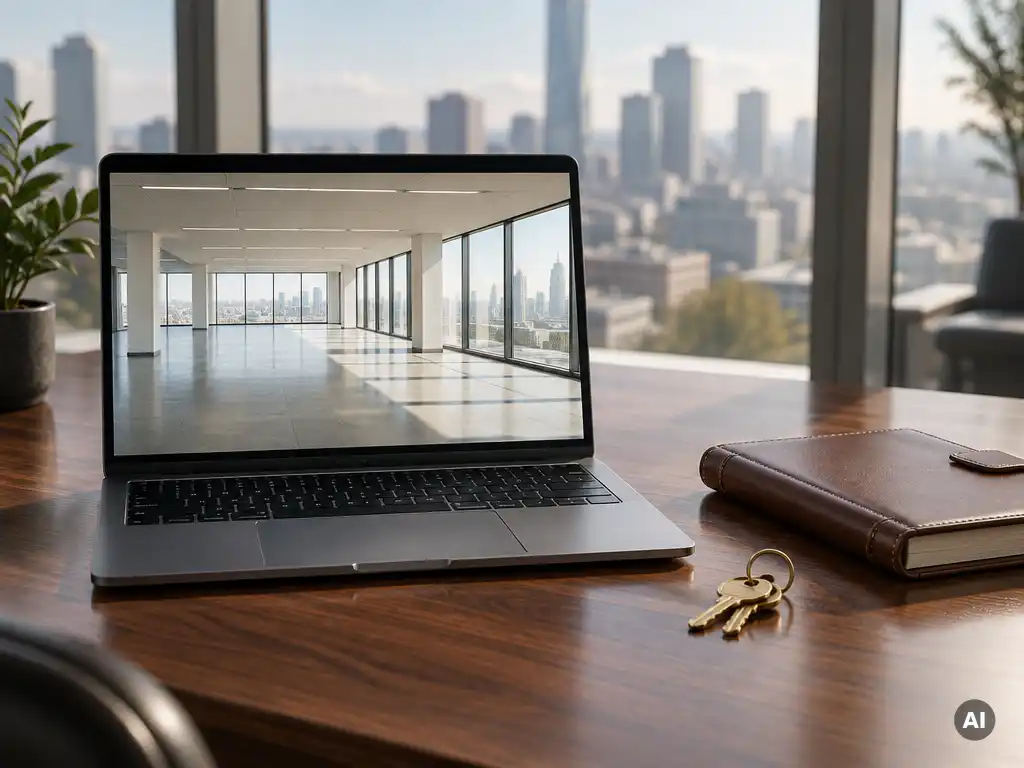
Yes, a virtual tour can reduce unnecessary commercial property viewings by letting prospects assess layout, scale, condition and suitability remotely before they visit. It works best as a filter: it removes poor-fit enquiries early, so the viewings that remain are with serious, informed prospects.
The reduction depends on the quality of the tour and the type of property. The sections below cover which viewings a tour replaces, how it screens prospects, where a physical visit still matters and how to measure the effect.
Virtual tours replace first-round and out-of-area viewings most effectively. These are early-stage visits where a prospect only needs to judge layout, size, finish and general suitability. Offices, retail units, studios, gyms and hospitality spaces suit this well because their value is largely spatial and visual.
Tours are most useful where the viewing is a screening step rather than a decision step. A tenant relocating from another city, or a retail operator comparing six units, can narrow the list without travelling to any of them.
Typical viewings a good tour can replace include:
Virtual viewings for offices and retail are particularly effective because decision-makers often need to circulate the space internally. A shareable link lets several people review the same property without any of them attending in person.
A 3D tour screens out unsuitable prospects by showing the real scale, layout and condition of a space up front, so people who would reject it on sight can self-select out before booking a visit. This saves viewing time for both the agent and the prospect.
Common reasons for a failed viewing are issues a tour reveals in minutes. These include a floor plate that is too small, an awkward column grid, poor natural light, a layout that does not suit the intended use or a unit that is clearly more or less polished than expected.
The process works in three ways:
This shifts the viewing diary towards quality. Fewer visits are wasted on prospects who were never a realistic match.
A virtual tour lets viewers move through a space and see how rooms connect, while standard photos show fixed, curated angles. The key distinction is context: a tour conveys scale, flow and proportion, whereas photographs show only what the photographer chose to frame.
Photographs are valuable for marketing impact, but they can flatter a space or hide how areas relate to each other. Wide-angle lenses in particular can make a small unit look larger than it is, which leads to disappointment at the viewing.
A 3D virtual tour for commercial property gives the prospect control. They can stand where they like, look in any direction and understand distances between entrances, windows, storage areas and amenities. Many tours also include a dollhouse or floor plan view that shows the whole footprint at once.
Used together, photos and tours work well. Photos attract attention in listings, and the tour answers the practical questions that would otherwise require a visit. A good portfolio of scanned spaces shows how different the experience of a tour is from a gallery of still images.
An in-person viewing is still necessary when a prospect needs to judge things a tour cannot convey: sound, smell, air quality, the surrounding street, footfall, parking and building services. It is also needed before any serious commitment, such as signing a lease.
Tours reduce viewings, but they do not eliminate them. Situations that usually still call for a physical visit include:
It is worth being clear that a tour is a visual record, not a technical survey. Where measured information is required for design or refurbishment, a dedicated survey is a separate piece of work. The aim of a tour is to make sure that people who do attend are there for the right reasons.
A virtual tour reduces viewings when it is complete, accurate, easy to use and kept up to date. Prospects must be able to see every relevant area clearly and trust that the tour reflects the space as it currently stands. Gaps or poor quality push them back towards booking a visit.
Several factors separate a tour that filters viewings from one that merely decorates a listing:
Staging also matters. An empty, tidy unit that is well lit gives viewers a clear sense of potential, and the same care you would give to photography applies to scanning day. Strong 3D scanning for commercial property combines accurate capture with thoughtful preparation.
Agents and landlords can measure the reduction by comparing viewing numbers, enquiry quality and conversion rates before and after introducing a tour. The most useful metric is the ratio of offers to viewings, since fewer wasted visits should raise that ratio.
A simple approach is to track these figures for similar properties, with and without a tour:
Avoid expecting a fixed outcome. Results vary by property type, market conditions and how the tour is promoted. Compare like with like and give the data enough time to be meaningful. If viewings fall while offers hold steady or improve, the tour is doing its job as a filter. This is a practical measure of how remote commercial property viewings support commercial property marketing, not just a branding exercise.
Scene3D produces Matterport virtual tours and interactive visual documentation of commercial spaces, helping agents and landlords present properties accurately before anyone books a visit. A well-captured tour supports remote viewings, stronger enquiries and a more efficient viewing diary.
If you want fewer wasted viewings and better-qualified prospects, get in touch with the Scene3D team to discuss your property and request a quote.