
Address
Studio 03
SUM Studios
1 Hartley Street
Sheffield
S2 3AQ
[email protected]
0114 399 1023
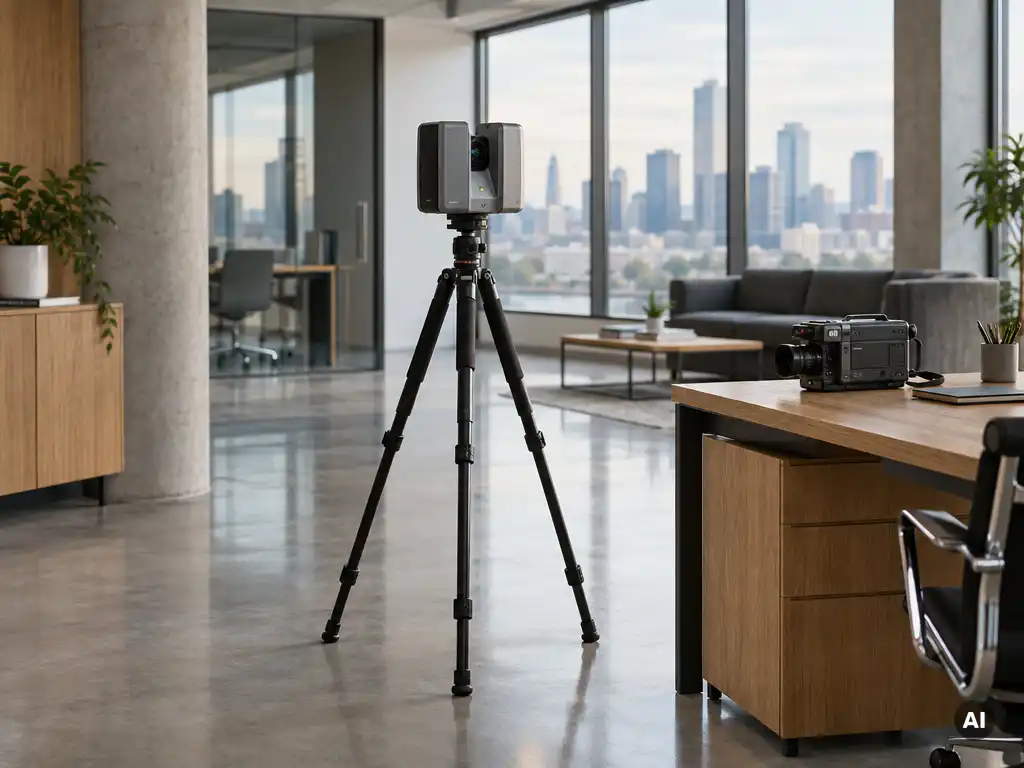
A 3D virtual tour lets prospective tenants and buyers explore a commercial property on their own, room by room, while a video shows a fixed, curated sequence the viewer cannot control. Tours suit detailed inspection and early screening, whereas video suits storytelling and brand building. For commercial property marketing, the strongest approach often combines both formats.
The right choice depends on the property type, the audience and the stage of the enquiry. The sections below answer the questions agents and landlords ask most when comparing these two formats.
Viewers control a virtual tour but only watch a video. In a 3D virtual tour, people choose where to go, what to look at and how long to stay. In a video, the producer decides the route, pace and focus, and the viewer follows along.
That difference shapes how each format is used. A tour behaves like a self-guided site visit. A prospective tenant can walk to the loading bay, check ceiling heights in the warehouse or inspect the meeting rooms, all without waiting for a viewing slot.
Video behaves more like a presentation. It can guide attention to the best features, add music or voiceover, and create an emotional impression of the building and its location. Viewers cannot go back to look at a corner the camera skipped.
In practical terms, the contrast looks like this:
Virtual tours generally help agents qualify leads better because they let prospects inspect a property thoroughly before requesting a viewing. Someone who has already explored every floor and still enquires is usually a more serious prospect than someone who watched a short promotional clip.
A tour answers many of the practical questions that otherwise consume agent time. Does the floor plate suit our desk layout? Is there enough clear height for racking? How far is the kitchen from the main office space? When those questions are answered in advance, the physical viewings that follow tend to be better informed and more focused.
Tours also help with remote decision-makers. A head office team in another city can review the same space together, which is difficult to achieve with a single video.
Video still plays a role in qualification, mainly by confirming whether the building’s character and location match a brand’s expectations. It filters on impression, whereas a tour filters on practical fit.
Video is the better choice when the goal is to convey atmosphere, location or brand rather than detailed layout. It works well for launch campaigns, social media, investor presentations and developments where the surrounding area is part of the appeal.
Several situations favour video:
Video is also easier to share in places where an interactive embed is not practical, such as email signatures or presentation slides. If the message is “this is what it feels like to work here”, video usually communicates it faster.
Costs and timelines vary widely for both formats, and neither is universally cheaper. A simple property video can be quick to shoot, but polished work with scripting, drone footage, editing and music adds time and expense. Virtual tours typically involve a single capture visit followed by processing.
The key difference is how the content is produced and updated. A tour captures the whole space once, and the finished asset can serve many uses over its lifetime. A video captures a chosen selection of views, so changes to the building or layout may require a reshoot.
When comparing quotes, it helps to work through the following steps:
Clear scoping before production is the best way to keep costs predictable, whichever format you choose.
Yes, virtual tours and video work well together because they serve different stages of the enquiry journey. Video attracts attention and builds interest, while the tour gives interested prospects the detail they need to decide whether to arrange a viewing.
A common pairing is a short promotional video on social media or in an email campaign, linking to the full tour on the property listing. The video draws people in, and the tour keeps them engaged long enough to assess the space properly.
Using both also gives agents flexibility. A prospect who prefers a quick overview can watch the video, and one who wants to check dimensions and layout can explore the tour. You can see examples of how interactive tours are presented in the Scene3D portfolio, which helps when judging how a tour might sit alongside existing marketing material.
Both formats can improve search visibility and enquiries by keeping visitors on a listing for longer and giving search engines richer content to index. Neither guarantees rankings, but engaging media tends to support stronger engagement signals and a better experience for people researching a property.
Video can appear in search results and on video platforms, which opens up an additional discovery channel. A well-titled and described video may reach people who never visit the agent’s website directly.
Virtual tours add value on the listing page itself. An embedded tour gives visitors a reason to stay, explore and return, and it can reduce the number of unsuitable enquiries by letting people self-select. Fewer, better-informed enquiries often save more time than a high volume of casual ones.
For the best results, give each asset descriptive titles and surrounding text, and embed them on the pages where buyers and tenants actually make decisions.
Scene3D produces immersive 3D virtual tours for commercial, educational, hospitality, health and fitness and retail spaces across the UK, helping agents and landlords present properties clearly and reach remote decision-makers. Used alone or alongside video, a tour gives prospects the detail they need to decide with confidence.
If you are planning how to market a commercial space, get in touch with Scene3D to discuss your property and find the right mix of formats.