Address
Studio 03
SUM Studios
1 Hartley Street
Sheffield
S2 3AQ
[email protected]
0114 399 1023
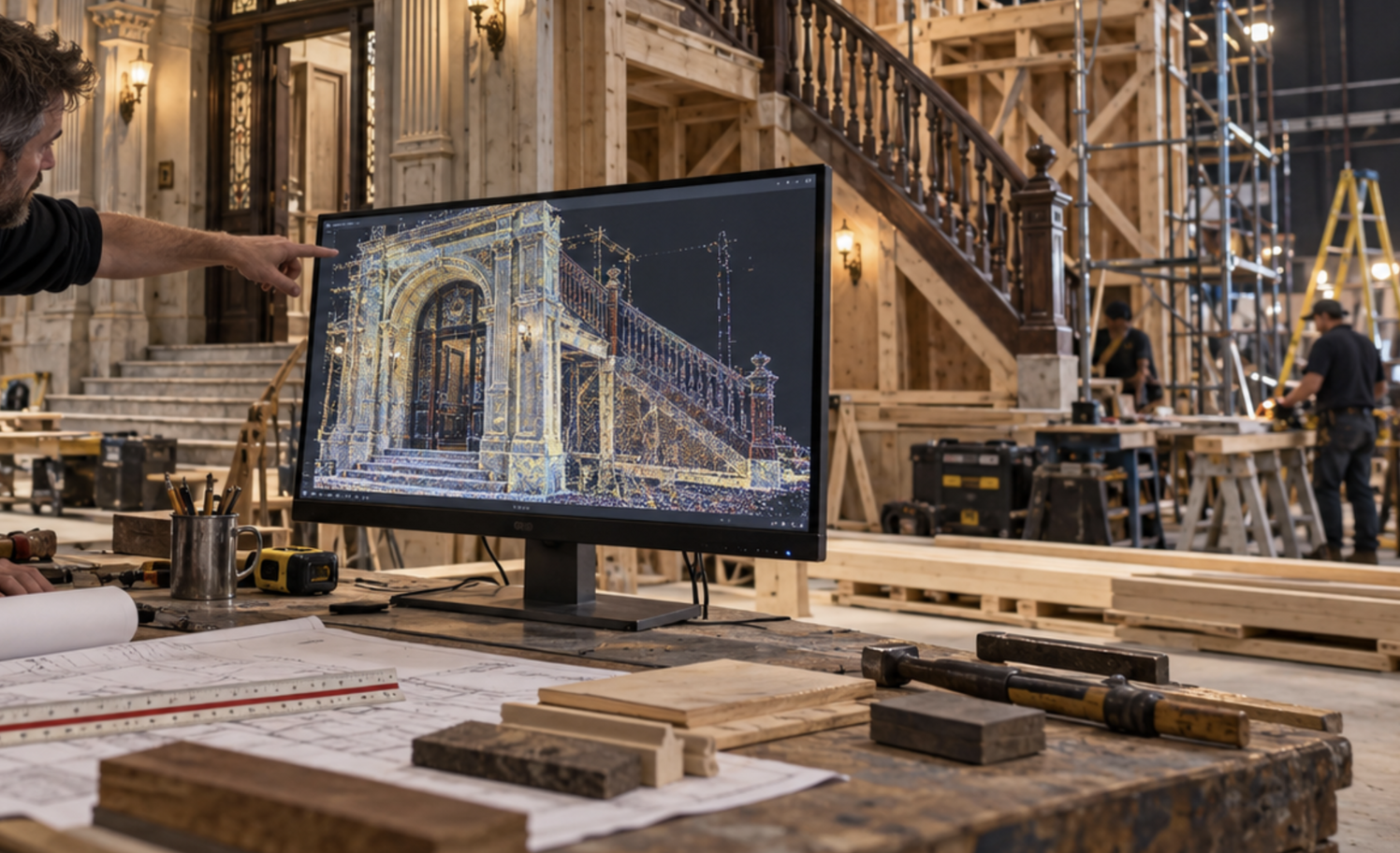
When watching a blockbuster film or binge-worthy television series, it’s easy to focus on the actors, the story, or the spectacular visual effects. What often goes unnoticed is the incredible work that happens long before the cameras start rolling. One of the most valuable tools behind the scenes is 3D scanning, a technology that is transforming the way set designers, production designers, art departments, and visual effects teams bring stories to life.
From accurately recreating historic buildings to planning complex action sequences, 3D scanning helps productions save time, reduce costs, and achieve an exceptional level of detail. As productions become increasingly ambitious, digital capture has become an essential part of the filmmaking process.
Let’s explore how set designers use 3D scans throughout film and television production and why this technology has become an industry favourite.
3D scanning is the process of capturing the exact shape, size, and appearance of a real-world object or environment. Using specialist equipment such as laser scanners or LiDAR technology, millions of precise measurements are collected to create an accurate digital model, often called a point cloud.
These scans preserve every detail, from the dimensions of an entire building to the texture of stone walls, timber beams, or intricate architectural features.
Unlike traditional surveying or manual measurements, 3D scanning captures complete environments quickly and with remarkable accuracy.
Film sets involve hundreds of people working across multiple departments. Production designers, set builders, lighting teams, visual effects artists, directors, and camera operators all need accurate information.
A detailed 3D scan provides a shared digital reference that everyone can work from.
This allows teams to:
Instead of relying on photographs and tape measurements, everyone has access to a highly accurate digital version of the location.
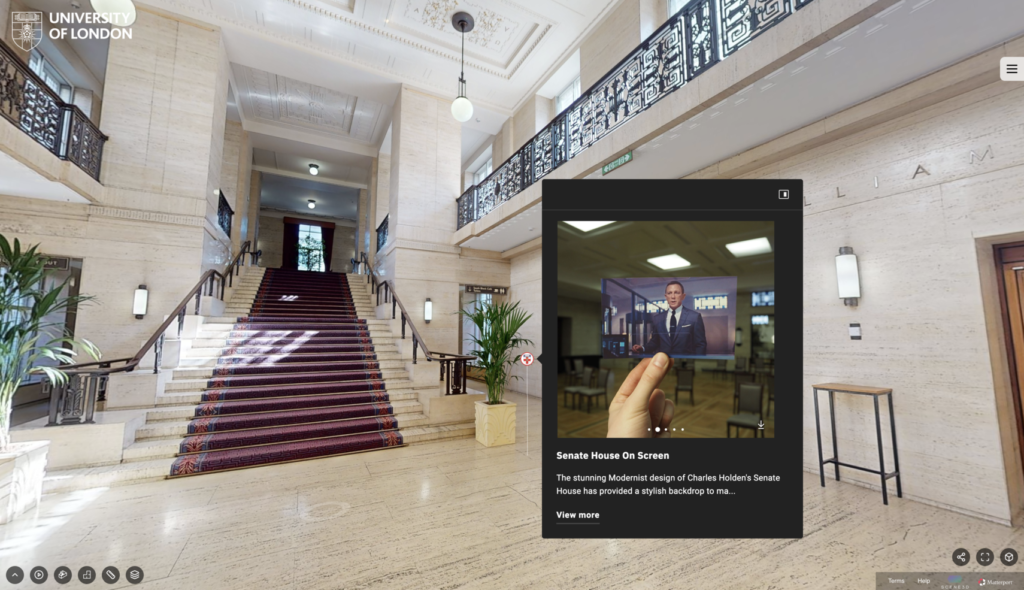
One of the biggest advantages of 3D scanning is the ability to create a digital twin of a filming location.
Whether filming inside a Victorian mansion, a modern office building, a castle, or an abandoned warehouse, the entire location can be captured before production begins.
The production design team can then explore the location virtually without needing to revisit the site.
This is especially useful when:
The digital model becomes a permanent record that can be referenced throughout production.
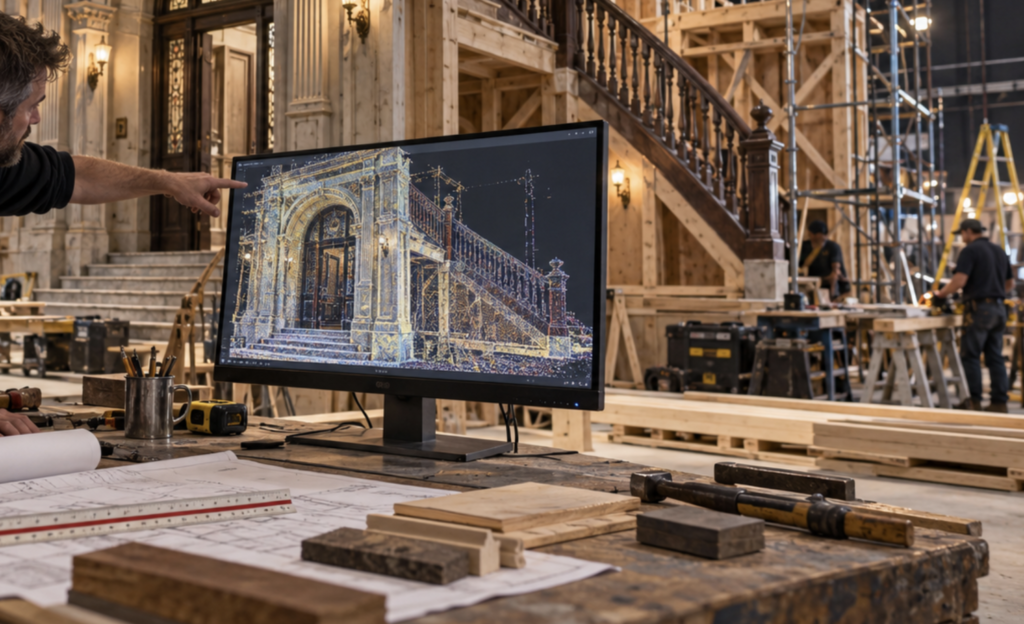
Not every scene is filmed on location.
Many productions recreate locations inside studios where lighting, weather, and logistics can be controlled more easily.
A detailed 3D scan gives set designers precise dimensions for every wall, doorway, window, staircase, and ceiling height.
Rather than estimating measurements, builders can recreate locations with millimetre-level accuracy.
This ensures:
The result is a seamless viewing experience where audiences cannot tell the difference between the original location and the studio build.
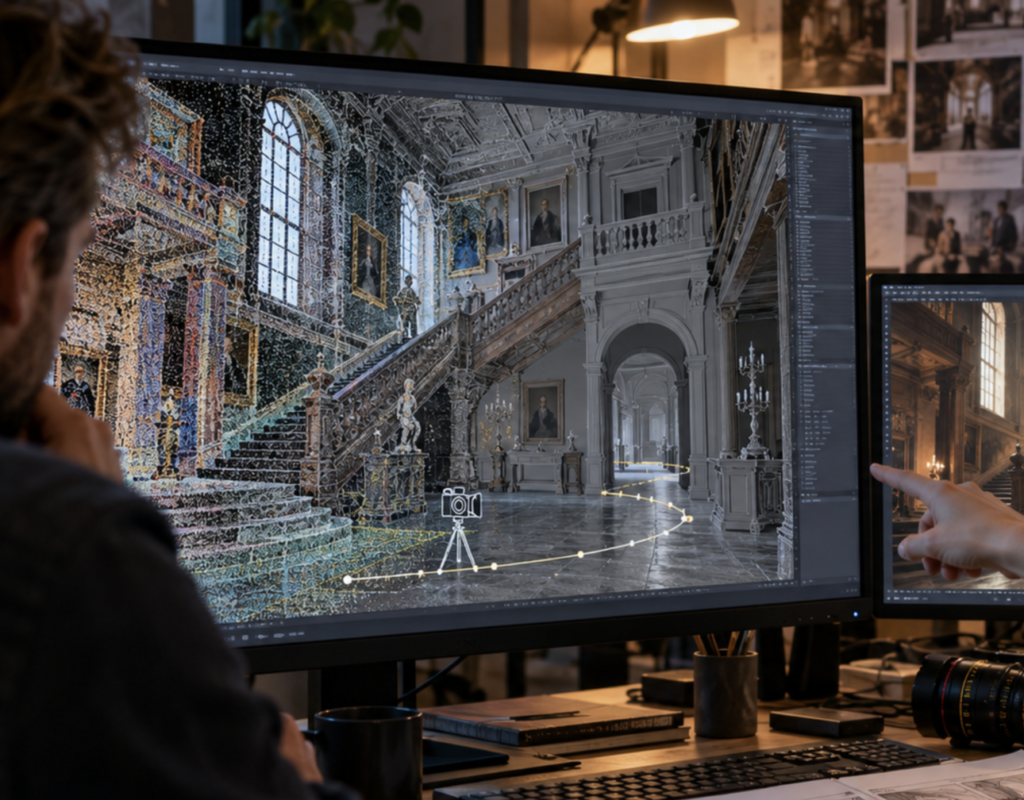
Modern productions often combine practical sets with computer-generated imagery.
3D scans provide the perfect foundation for VFX artists by giving them an exact digital representation of the real environment.
Instead of recreating locations manually, artists can import the scanned data directly into software such as Maya, Blender, Unreal Engine, or Houdini.
This helps create:
Because the digital environment matches the real location precisely, CGI blends naturally with live action footage.
Before filming begins, directors and cinematographers often create previsualisations, commonly known as previs. Using 3D scans, they can test camera angles, lighting setups, and actor movements before anyone arrives on set.
This makes it easier to identify potential problems early and refine creative decisions. Previsualisation also helps production teams communicate ideas clearly across departments, reducing confusion during filming.
Large productions often involve cranes, tracking systems, drones, and complex camera rigs.
A scanned location allows camera teams to test movements digitally before arriving on site.
This can reveal:
Planning in advance saves valuable production time and helps avoid delays on set.
Many productions film inside listed buildings, heritage sites, and culturally significant landmarks.
These locations often have strict rules regarding access and alterations.
3D scanning creates a permanent digital archive before filming begins, documenting the site in extraordinary detail.
This benefits both filmmakers and property owners by providing an accurate record of the location’s condition before production takes place.
It also allows production designers to work around protected features without risking damage.
Film production is increasingly global. Production designers may work in London, visual effects teams in Canada, animation specialists in New Zealand, and directors elsewhere entirely.
Instead of flying everyone to the filming location, a detailed 3D scan allows every department to inspect the location remotely. Everyone works from the same accurate data, reducing misunderstandings and speeding up decision-making.
Time is one of the most valuable resources in film production.
Every additional day on location can cost thousands of pounds.
By capturing everything in a single scanning session, production teams minimise repeat visits and reduce delays caused by missing measurements.
This efficiency benefits:
The more accurate the information at the start of a project, the smoother the entire production process becomes.
While film and television are major users of 3D scanning, the same technology is now widely used across architecture, construction, heritage preservation, gaming, virtual production, and property marketing.
As virtual production techniques continue to evolve, accurate digital environments are becoming even more important. Technologies such as LED volume stages and real-time rendering depend on high-quality digital assets that begin with accurate scanning.
For production companies, investing in accurate site capture is no longer a luxury. It has become an essential part of delivering efficient, high-quality productions.
Whether you’re preparing for a feature film, television drama, commercial, or virtual production, Scene3D provides highly accurate 3D scanning services that give your creative teams the information they need to work with confidence.
Our detailed scans help production designers, art departments, architects, and visual effects teams make informed decisions from the earliest stages of planning through to final delivery. We capture locations with exceptional precision, creating reliable digital assets that support everything from studio set construction to CGI integration and remote collaboration.
If you’re looking to streamline production, improve accuracy, and reduce costly site visits, Scene3D can help.
Get in touch with Scene3D today to discuss your next production and discover how professional 3D scanning can bring greater efficiency, flexibility, and creative freedom to your project.