
Address
Studio 03
SUM Studios
1 Hartley Street
Sheffield
S2 3AQ
[email protected]
0114 399 1023

Art exhibitions are often temporary experiences. Once an exhibition closes, the carefully designed layouts, visitor flow, and relationship between artworks disappear. While photographs, videos, and printed catalogues preserve individual pieces, they rarely capture the complete experience of moving through the exhibition itself. This is where Matterport technology offers a significant advantage.
At Scene3D, we help galleries, museums, artists, and cultural institutions create immersive digital archives using Matterport 3D scanning. These detailed virtual records preserve exhibitions exactly as they appeared, creating valuable resources for historical documentation, education, marketing, and future research.
Every exhibition represents months or even years of planning. Curators carefully arrange works to tell a story, guide visitors, and create meaningful interactions between pieces. Once an exhibition is dismantled, that unique environment cannot be recreated exactly.
An exhibition Matterport digital twin preserves the entire exhibition in its original state. Instead of relying on static photographs, institutions can revisit every gallery room, examine the placement of artworks, and experience the exhibition from virtually any viewpoint.
This creates a permanent record that remains accessible long after the physical exhibition has ended.
The layout of an exhibition is often as important as the artwork itself. Lighting, spacing, wall text, and the sequence of rooms all contribute to the visitor experience.
Matterport captures these elements together in a fully navigable virtual environment. Future curators, researchers, and historians can study how the exhibition was designed rather than relying on floor plans or written descriptions.
This level of documentation helps preserve the curator’s original vision with remarkable accuracy.
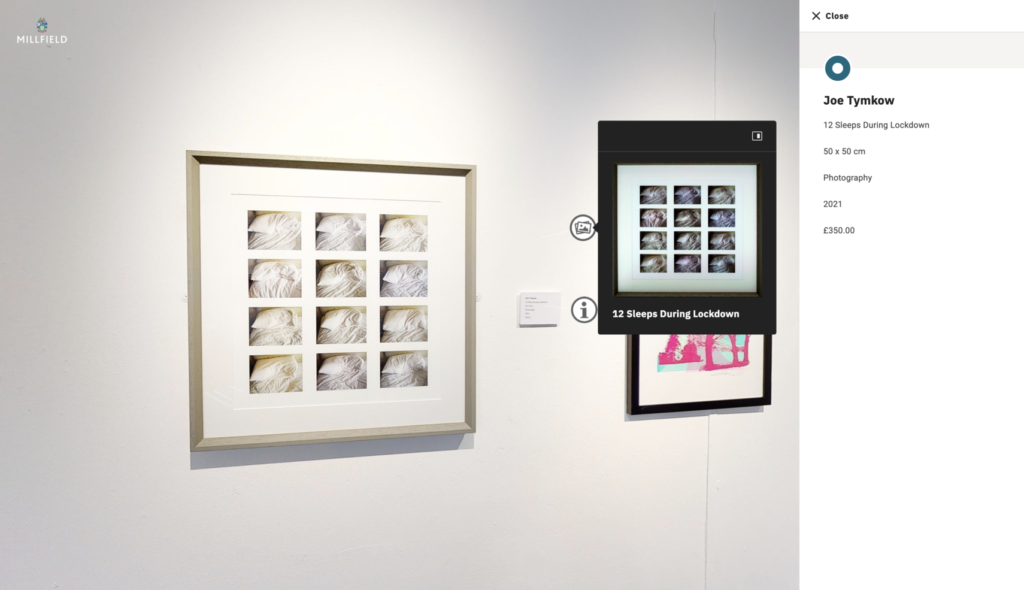
Digital archives become valuable educational resources for universities, museums, and researchers around the world.
Students studying exhibition design can virtually walk through past exhibitions without travelling. Researchers can examine installations years after they have closed. Artists can reference previous displays of their work, while educators can incorporate immersive exhibition tours into classroom learning.
Because Matterport models are cloud-based, these archives can be shared securely with selected audiences or made publicly available for wider educational access.
Not every visitor has the opportunity to attend an exhibition in person. Geographic distance, mobility limitations, scheduling conflicts, or limited exhibition durations can prevent many people from experiencing important cultural events.
A Matterport virtual tour removes these barriers by allowing audiences to explore exhibitions from anywhere using a computer, tablet, or smartphone.
This extended accessibility allows museums and galleries to reach international audiences while preserving cultural heritage for future generations.
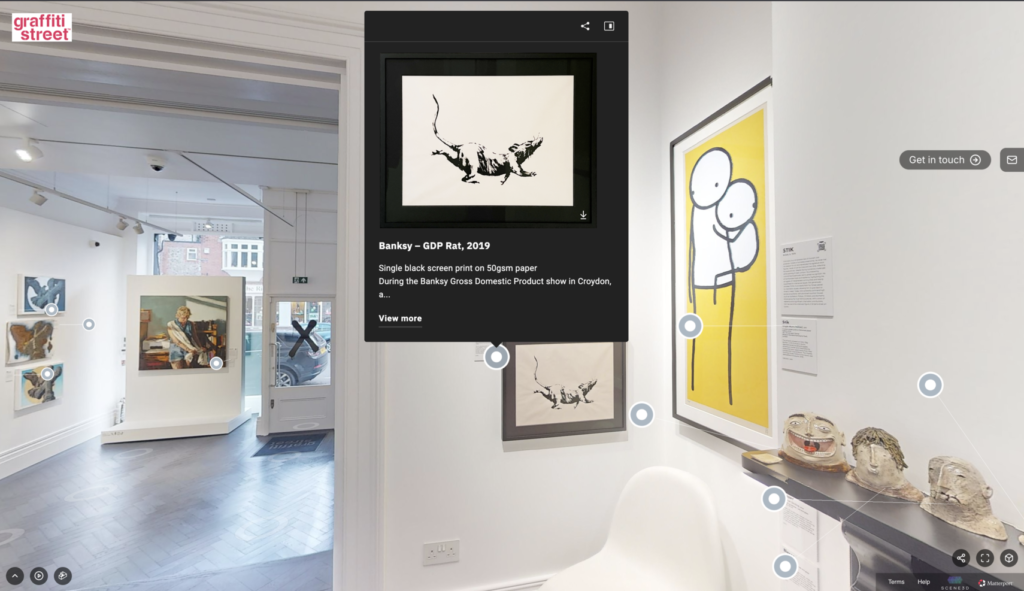
Artists also benefit from comprehensive digital documentation of their exhibitions.
Instead of relying solely on installation photographs, artists receive a complete virtual representation of how their work was presented. This can be included in portfolios, grant applications, museum submissions, and professional documentation.
Collectors, curators, and potential collaborators can experience the exhibition in context, providing a richer understanding of the artist’s work.
Museums and galleries increasingly recognise the importance of digital preservation. As collections grow and exhibitions become more ambitious, maintaining accurate digital records becomes an essential part of long term collection management.
Matterport technology creates highly detailed spatial records that complement traditional documentation methods. Combined with photographs, catalogues, and collection databases, immersive 3D archives provide a more complete historical record.
This investment ensures that exhibitions remain accessible and valuable long after the gallery walls have changed.

Unlike standard photography or video, Matterport produces a fully interactive digital twin that allows viewers to navigate naturally through the exhibition space.
Key benefits include:
The result is an archive that feels immersive rather than simply observational.
Whether you are documenting a museum exhibition, gallery installation, art fair, or private collection, Scene3D provides professional Matterport scanning services that create lasting digital archives with exceptional accuracy.
Our team helps cultural institutions preserve exhibitions exactly as they were experienced, making them accessible to future researchers, educators, artists, collectors, and audiences around the world.
If you are planning an upcoming exhibition or want to digitally preserve an existing one, contact Scene3D today to learn how our Matterport solutions can help protect your artistic legacy for years to come.