
Address
Studio 03
SUM Studios
1 Hartley Street
Sheffield
S2 3AQ
[email protected]
0114 399 1023
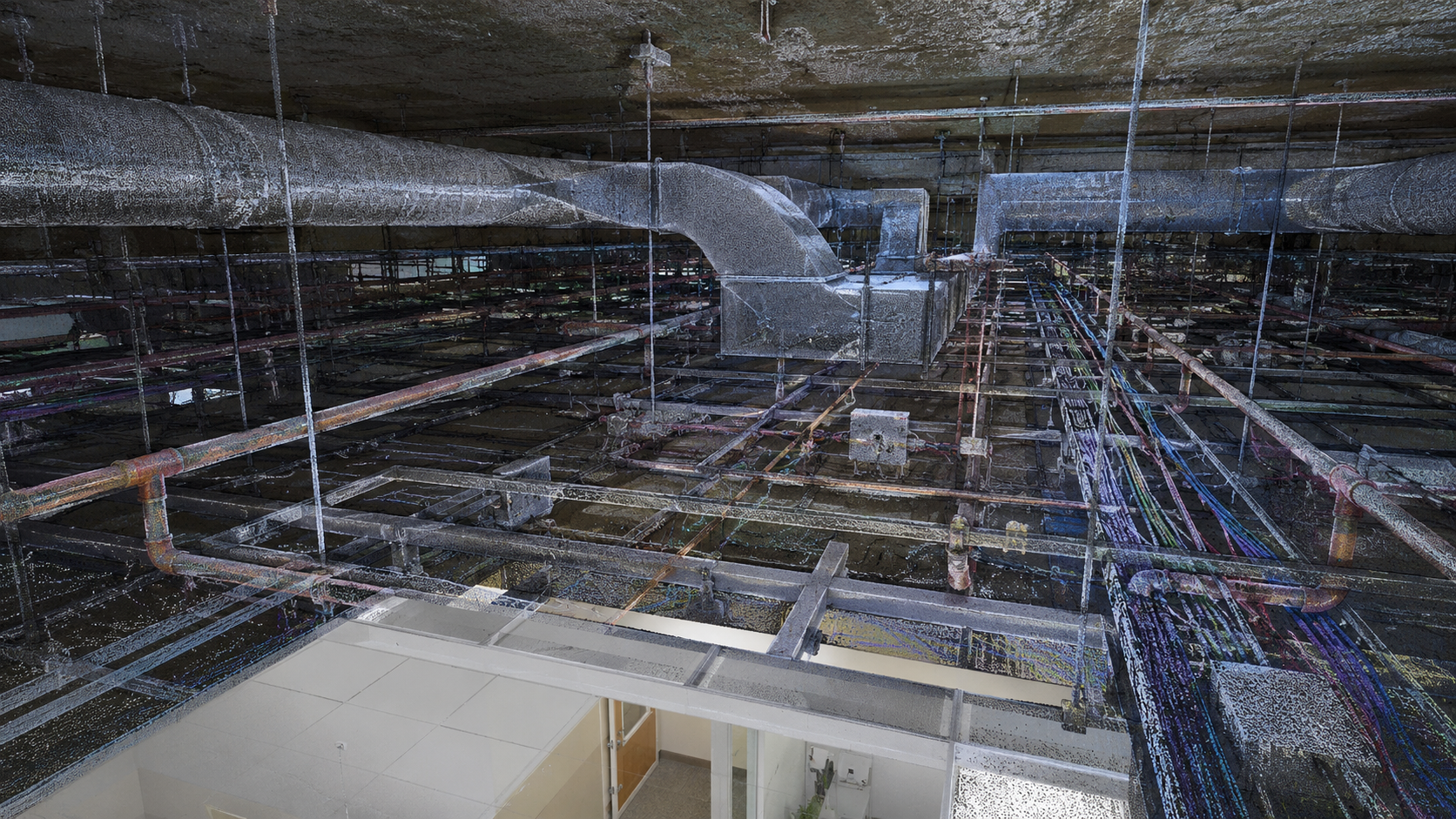
Anyone who has worked on a refurbishment project has encountered the moment. Installation begins: a service is lifted into place, and suddenly the team realises that what looked perfectly coordinated on the drawings simply will not fit in reality.
This is what is known as a clash.
In the simplest terms, a clash occurs when something newly designed conflicts with something that already exists in the building. A common example is ductwork being routed through a ceiling void only to collide with a structural beam that was never shown in the drawings.
Clashes are often treated as design coordination problems. In many project meetings, the conversation quickly turns toward who failed to coordinate properly. However, the truth in most refurbishment projects is much simpler and more important. The majority of clashes do not begin with poor design. They begin with inaccurate information about the existing building.
Understanding this point can significantly reduce risk, cost, and delays during refurbishment works.
Unlike new construction, refurbishment projects rarely begin with a completely reliable understanding of the building. Even when drawings are available, they often represent the building at a particular moment in time rather than its current condition.
Buildings change continuously over their lifespan. Mechanical systems are replaced, partitions are moved, structural reinforcements are added, and ceiling voids become increasingly crowded with services installed over many years. Not every change is documented, and even when documentation exists, it may not fully reflect what was actually built.
As a result, the information used during the design stage often contains gaps or inaccuracies.
Design teams may be working carefully and responsibly, but they are still starting from a point that does not fully reflect reality. When this happens, the design may appear fully coordinated in the drawings, yet be impossible to install on site.
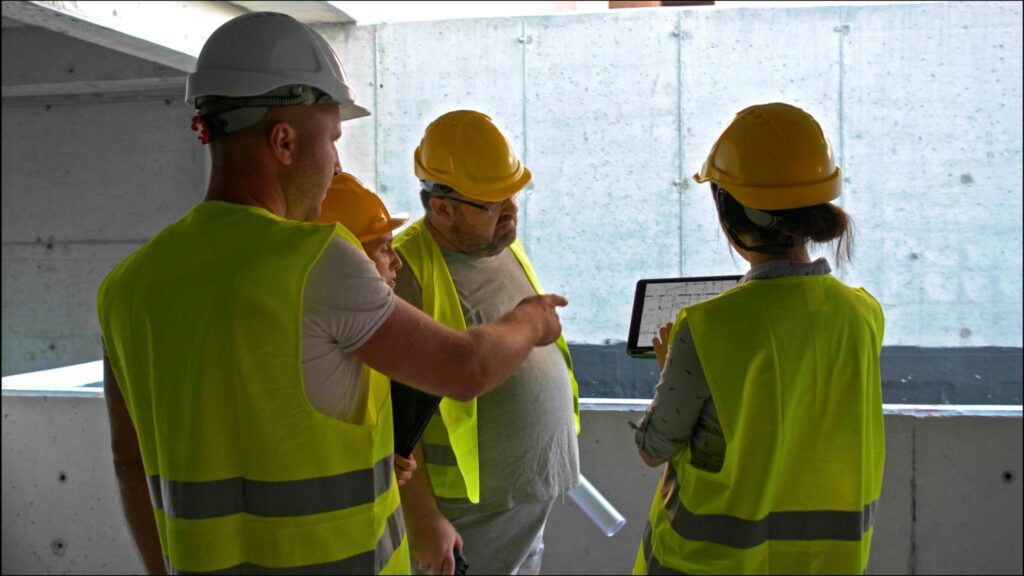
One of the most common sources of clashes during refurbishment is the simple fact that existing drawings often differ from the real building.
Structural elements may be positioned differently than expected. Ceiling heights may be lower than documented. Service routes that were installed during previous renovations may not appear in any available records.
A contractor may begin coordination assuming that a ceiling void contains a certain amount of available space. Based on the drawings, the new mechanical services are routed neatly through the area.
Once installation begins, however, the team may discover that the ceiling void is already far more congested than expected. Additional pipework, cable trays, and legacy duct runs occupy the same space that the new design intended to use.
What appeared clear and workable on paper suddenly becomes extremely constrained in practice.
This is a very typical refurbishment situation. The design itself is not necessarily flawed. The problem is that the starting information did not accurately represent the building.
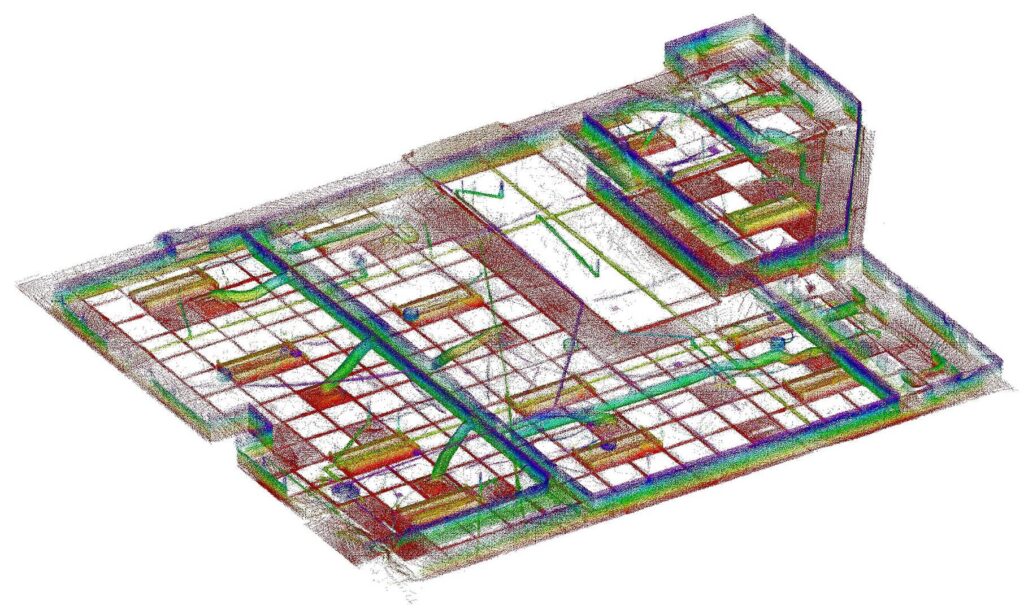
Imagine a refurbishment project in which a contractor installs new ventilation ductwork in an existing office building.
The design team relies on archived drawings of the building structure and existing services. Based on this information, the coordination process shows that the ductwork can run cleanly across the ceiling void and connect to the main riser.
Everything appears aligned and coordinated.
However, once installation begins, the installation team encounters a steel beam that was never shown on the drawings. The beam runs directly across the planned duct route.
At this point, the work stops.
The duct route must be redesigned. Adjacent services may also need to move to create a workable path. Fabricated components may need to be modified or reordered. Installation crews may remain idle while the revised design is produced.
A problem that seemed small on paper quickly begins to affect the project schedule and budget.
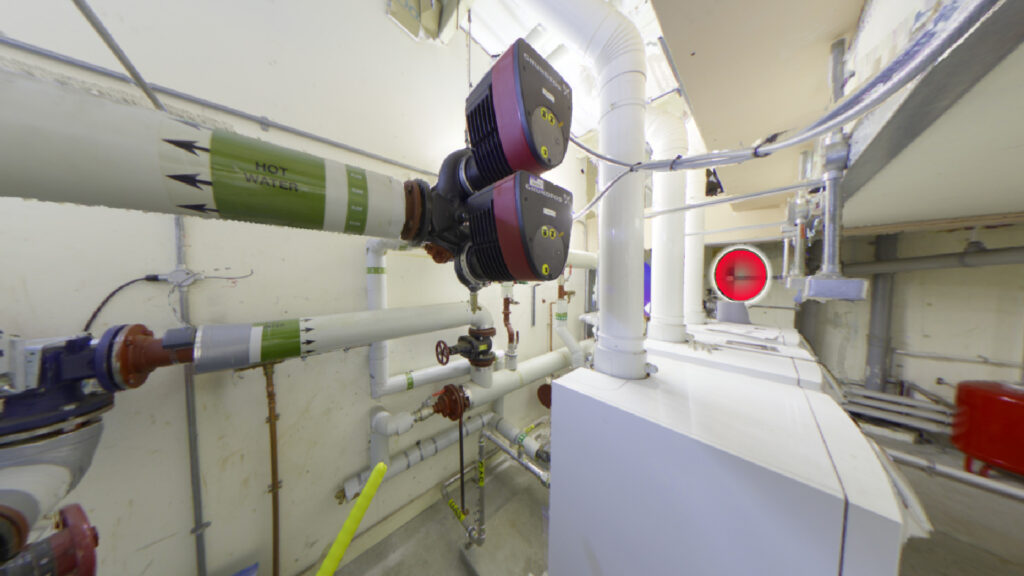
Clashes are not simply technical inconveniences. They have real consequences for projects.
When a clash is discovered on site, several things typically happen at once. Work is paused while the issue is investigated. Designers must produce a revised solution. Fabricated materials may need to be altered or replaced. Contractors must reorganise labour and sequencing.
Each of these steps adds cost and delays progress.
Even relatively minor clashes can create a chain reaction across the project. If one service route changes, other services may also need to move. Installation teams may lose productive time while waiting for updated information.
In refurbishment projects where programme timelines are already tight, these disruptions can quickly accumulate. What began as a simple conflict between a duct and a beam can turn into several days or even weeks of disruption.
Many project teams attempt to prevent clashes by investing heavily in coordination processes. This is an important step, and it certainly improves collaboration between disciplines.
However, coordination can only work with the information available.
If the building’s underlying representation is incorrect, coordination cannot fully resolve the problem. The design team may successfully coordinate services with one another while still missing elements present in the real building.
In other words, coordination cannot correct inaccurate starting data.
This is why many refurbishment projects still encounter clashes despite careful design reviews and coordination meetings.
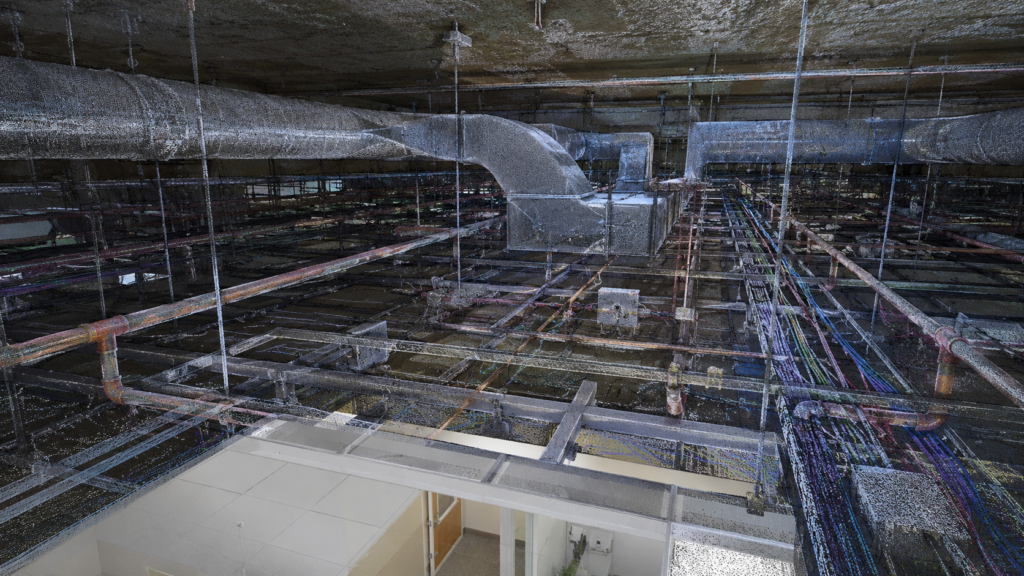
At the beginning of a refurbishment project, the most important information is the geometry of the existing building. This includes structural elements, service routes, ceiling heights, and the true dimensions of the spaces where new work will occur.
When this base information is incomplete or outdated, every subsequent design decision carries additional risk.
Teams may unknowingly design solutions that fit within the drawings but not within the building itself.
Once construction begins, the difference between the two becomes visible, and that is when clashes emerge.
In many cases, the cost of correcting these issues far exceeds the effort required to confirm the accuracy of building data at the start.
Refurbishment projects are inherently complex. Existing buildings rarely behave exactly as expected, and some uncertainty will always exist.
However, one of the most effective ways to reduce coordination risk is to ensure that the project begins with reliable information about the existing conditions.
Accurate geometry of the building provides a stable foundation for design. When designers understand the space’s real dimensions and constraints, they can make informed decisions from the beginning.
Coordination then becomes far more meaningful because it is based on conditions that actually exist on site.
This approach does not eliminate every potential clash, but it significantly reduces the likelihood of costly surprises during installation.
The earlier a project team understands the true conditions of the building, the more options remain available.
Designers can route services intelligently around structural elements. Contractors can plan installation sequences more efficiently. Fabrication can proceed with greater confidence.
Most importantly, the project avoids the cycle of redesign and delay that often follows unexpected site discoveries.
When accurate information is established early, coordination becomes a process of optimisation rather than damage control.
When the base geometry reflects reality, design teams can coordinate with confidence, and contractors can avoid costly surprises during installation.
If you are about to start coordinating a refurbishment project, make sure your initial information is accurate.At Scene3D, we focus on helping project teams begin refurbishment work with reliable, accurate representations of existing buildings.