
Address
Studio 03
SUM Studios
1 Hartley Street
Sheffield
S2 3AQ
[email protected]
0114 399 1023
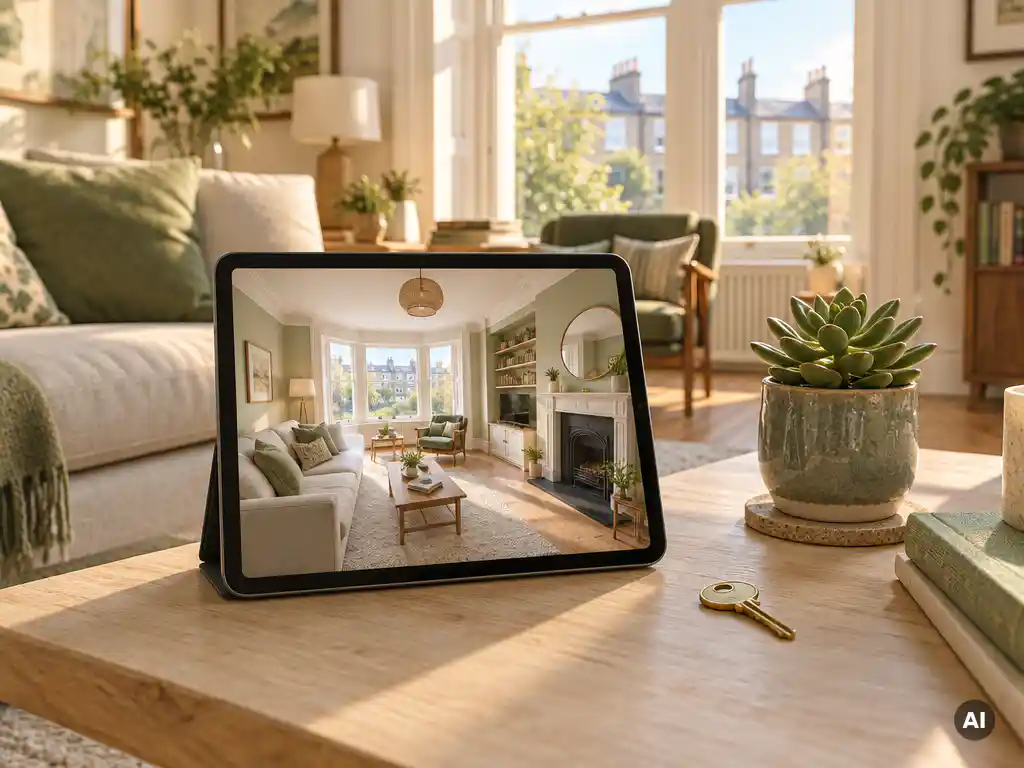
Yes, virtual tours work for rental properties just as well as for homes for sale, and in several ways they work better. Lettings move quickly, tenants often search from afar, and every empty viewing slot costs a landlord time and rent. A 3D virtual tour lets renters judge layout, size and condition before they ever book a visit. Below, we answer the most common questions about how virtual property viewings perform in lettings.
Tenants use virtual tours to shortlist quickly and decide faster, while buyers use them to study a property they may own for years. Renters browse more listings in less time, often relocating from another city, so a tour acts as a first viewing rather than a supplement to one.
A buyer might revisit a tour several times, measuring rooms and imagining renovations. A tenant typically wants answers to practical questions: Is the bedroom big enough for a double bed and a desk? Does the kitchen have decent storage? How much natural light comes in? A walkable 3D model answers these better than a handful of photos, because the viewer controls where they look.
Timing also differs. Rental decisions often happen within days, so a tour that is ready at launch helps a listing convert while demand is highest. Students, relocating professionals and international tenants benefit most, as they may never see the property in person before committing.
Yes. Virtual tours reduce wasted viewings by letting tenants rule a property in or out before arranging a visit. Those who do book have already seen the layout and condition, so appointments are more likely to come from serious applicants rather than casual browsers.
Wasted viewings usually happen for predictable reasons: the rooms are smaller than the photos suggested, the layout does not suit the tenant’s furniture, or the property simply feels different from the listing. A virtual tour tackles these mismatches early, which gives agents back time that would otherwise go on accompanied viewings that lead nowhere.
The benefits tend to include:
Results vary by property and market, so treat these as likely benefits rather than guarantees.
For most rental properties, yes, particularly where a tour will be reused or where voids are expensive. The value comes from shorter void periods, fewer unproductive viewings and a stronger listing that stands out on portals. A tour is a one-off capture that can serve a property across multiple tenancies.
Consider the economics from the landlord’s side. Each week a property sits empty is lost rent, and every wasted viewing consumes agent time. If a tour helps fill the property even slightly sooner, it can offset its own cost. The return is strongest for higher-value lets, multiple units in one building, and properties that regularly turn over.
The case is weaker for a single low-rent unit that is let within days through word of mouth. Think about how long your properties typically stay vacant, and how often you re-let, before deciding.
Properties that benefit most are those where layout and scale are hard to judge from photos, or where tenants are likely to be remote. Build-to-rent developments, serviced apartments, student accommodation, houses in multiple occupation and larger family lets all fit this description well.
Studio flats and compact one-beds also gain a lot, since a walkable model communicates how a small space really lives.
Virtual tours handle occupied and furnished rentals by being captured between tenancies, or by scanning the property with the current occupant’s agreement and minimal disruption. Capturing during a void gives the cleanest result, and furnished lets can show their furnishings as part of the offer.
The best moment to capture a tour is usually the gap between tenants, when the property is clean and empty or freshly staged. If a tenant is still in residence, the outgoing tenant’s consent matters, and tidying beforehand makes a significant difference to how the tour feels. Personal items, documents and valuables should be put away, as a tour records everything in view.
For furnished lets, a tour is useful because it shows exactly what is included, which reduces disputes and questions later. For unfurnished lets, it lets tenants measure up and plan their own furniture. Either way, a tour taken at the start of a tenancy cycle can stay useful for as long as the property remains broadly unchanged.
Not entirely. Virtual tours replace the first viewing for many tenants, and some will take a property on the strength of a tour alone, but most still want a brief physical visit before signing. The tour narrows the field so that in-person viewings are shorter and better targeted.
There are things a tour cannot convey: noise from the street, the feel of the neighbourhood, water pressure, or how a building smells. Many tenants will still check these in person, especially for long tenancies. Remote tenants, however, may rely on the tour plus a live video call with the agent.
It also helps to understand how a tour differs from a video walkthrough. A video follows a fixed route chosen by whoever filmed it, while a 3D tour lets the viewer move freely, pause anywhere and look in every direction. That freedom makes a tour more useful for decisions, whereas video is better for quick, atmospheric previews. Many agents use both.
Scene3D produces immersive 3D virtual tours for lettings, residential and commercial spaces across the UK, helping agents and landlords present rentals clearly and attract better-qualified enquiries. Our work includes:
See how our virtual tours of houses work in practice, or contact the Scene3D team to discuss your rental properties and get a quote.