
Address
Studio 03
SUM Studios
1 Hartley Street
Sheffield
S2 3AQ
[email protected]
0114 399 1023
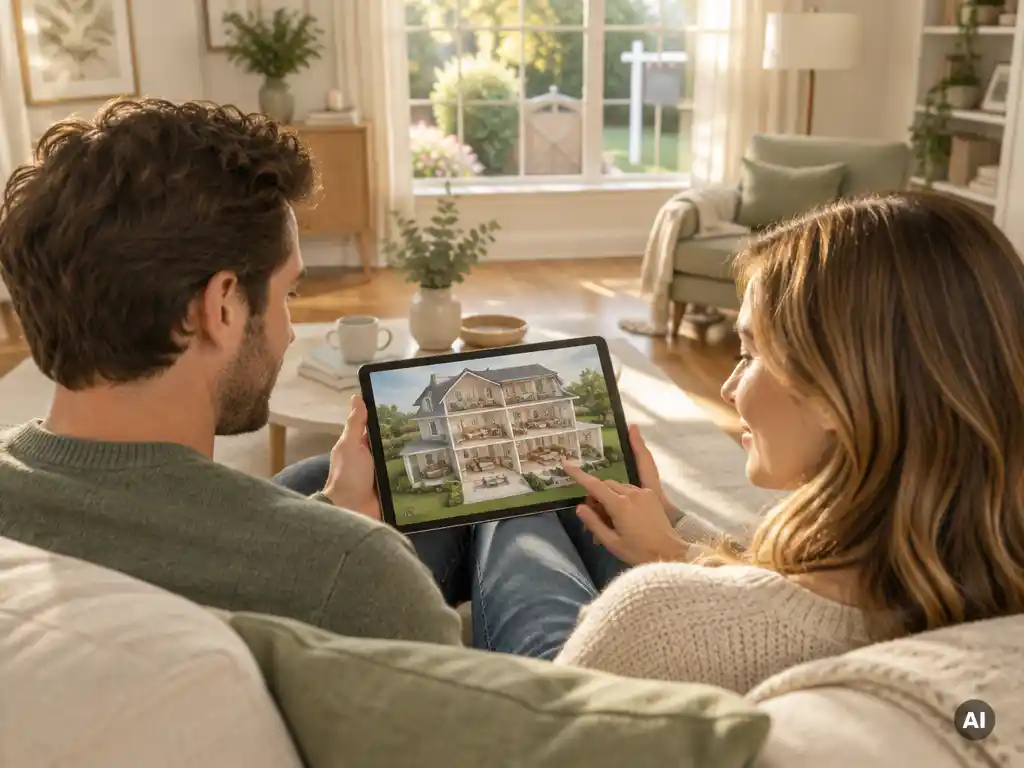
Yes, 3D house tours are useful when selling a home. They let buyers explore a property online at their own pace, which attracts more serious enquiries and reduces wasted viewings. A well-captured tour also gives a listing a stronger presence than photos alone, though it supports in-person viewings rather than replacing them.
The benefit is greatest for homes that are hard to judge from flat images, such as larger or unusual homes or those being sold to relocating buyers. Below, we answer the most common questions sellers ask about 3D tours, from cost to getting the best results.
3D tours help a property sell faster by giving buyers a clear sense of layout, space and flow before they visit. Buyers who have already walked through the home online tend to arrive better informed and more committed, so enquiries are stronger and fewer viewings are wasted.
Speed in a sale usually comes from reducing hesitation. A buyer scrolling through listings can only judge so much from a handful of photos, and gaps in understanding often lead to a quick scroll past. An interactive tour closes those gaps.
Industry experience shows several practical reasons tours support quicker decisions:
A tour is not a guarantee of a fast sale. Pricing, location and condition still matter most, but a tour removes friction from the process.
The cost of a 3D house tour in the UK varies with the size of the property, the number of rooms and the level of service. Most providers quote per property, so a studio flat costs less than a large detached home. Always request a written quote based on your specific address.
Rather than quoting a single figure, it is more useful to understand what drives the price:
It also helps to check how long the tour stays online, since some providers charge ongoing hosting fees while others include a fixed period. When comparing quotes, look at the full package rather than the headline price alone.
Photos show selected views, video shows a guided path, and a 3D tour lets the viewer choose where to go. That control is the key distinction. A 3D tour is a navigable model of the whole property, while photos and video are edited by someone else.
Each format has a role, and the strongest listings often combine them.
Photos are essential for first impressions and work on every portal and social platform. Their limitation is selectivity: buyers only see what the photographer chose to show, and room relationships can stay unclear.
Video adds movement and atmosphere, and it suits storytelling and lifestyle features. However, the viewer follows a fixed route and cannot linger in a room or revisit a corner on their own terms.
A 3D tour lets buyers move freely between rooms, look around in every direction and often view a dollhouse-style overview of the layout. This makes it the best format for judging space and flow. If you are exploring a Matterport alternative in the UK, the same principle applies: what matters is capture quality, tidy presentation and how easily the tour embeds in your listing.
Homes with complex layouts, high price points or distant likely buyers benefit most from a 3D tour. Any property where space, flow or scale is hard to convey in a few photographs gains from letting buyers explore it fully before visiting.
Properties that typically see the strongest value include:
Smaller, simple properties can still benefit, particularly in competitive markets where a listing needs to stand out. The more a buyer has to imagine, the more a tour helps.
No, 3D tours do not replace in-person viewings. Buyers still want to experience a home’s light, noise, neighbourhood and atmosphere before making an offer. What tours do is filter the viewing stage, so the people who visit have a genuine interest in the home.
Think of a tour as the first viewing rather than the final one. It answers practical questions early, such as whether the kitchen is large enough or whether the bedrooms are well proportioned. That frees up in-person visits for the things a screen cannot capture.
For sellers, this has a useful side effect. Fewer unsuitable viewings means less disruption to your household and less time spent tidying for people who were never going to proceed.
Sellers get the most from a 3D tour by preparing the home properly before capture and then promoting the tour wherever buyers will see it. A tidy, well-lit property and a visible tour link make the biggest difference to results.
Follow these steps for the best outcome:
Good property marketing also means checking that the tour works on mobile, since many buyers browse on their phones first.
Scene3D is a UK-based company that captures immersive 3D virtual tours for homes of all sizes, from studio flats to large family properties. If you want a tour that makes your listing stand out, here is what you can expect:
To see how this works in practice, explore our virtual tours of houses, or contact the team for a quote tailored to your property.