
Address
Studio 03
SUM Studios
1 Hartley Street
Sheffield
S2 3AQ
[email protected]
0114 399 1023
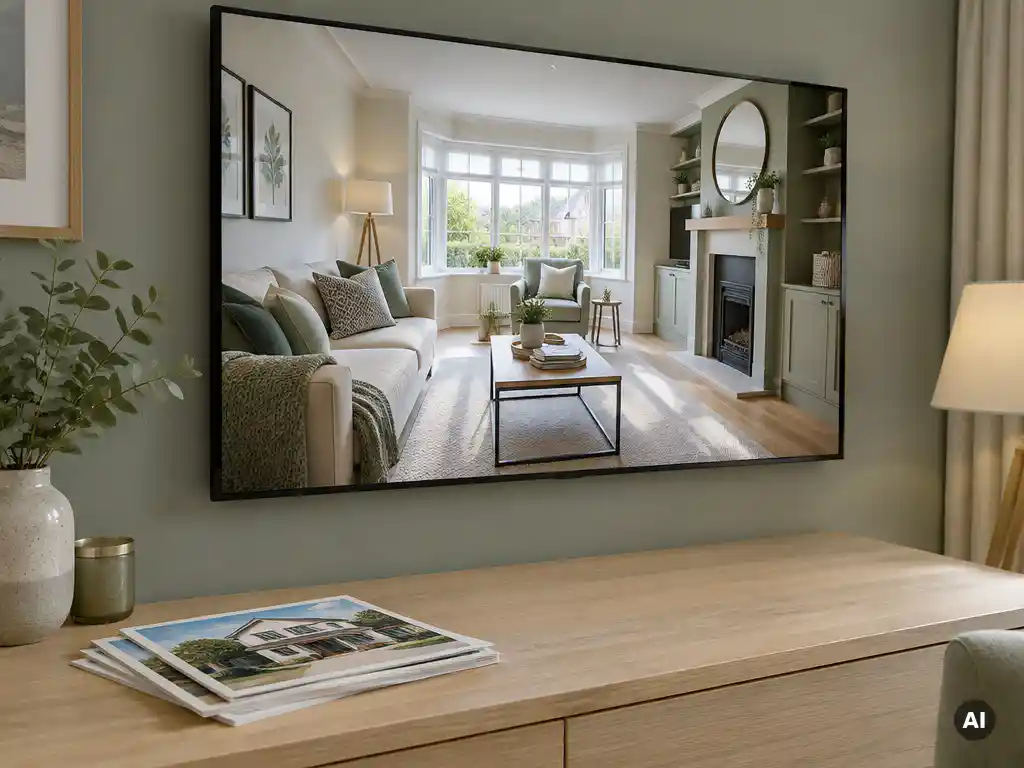
A virtual house tour is an interactive 3D model of a property that viewers can walk through at their own pace, while property photos are fixed still images chosen by a photographer. A tour shows how rooms connect and how big they feel, whereas photos show only selected angles. Most sellers benefit from using both together.
The two formats solve different problems. Photos grab attention in search results, and a tour keeps serious buyers engaged long enough to form a real opinion. The sections below cover how each is captured, how buyers experience them, what they cost and when to combine them.
A 3D virtual tour captures a property by scanning each room from multiple fixed positions with a specialist camera or scanner, then stitching those scans into a single navigable model. The result is a continuous walkthrough, not a set of separate images, so viewers can move between rooms as if standing inside the building.
In practice, the operator places the scanner at points throughout the property, usually working room by room. Each scan records imagery and depth information, which software then aligns into one connected space. This is what separates 3D property scanning from simple 360 photography. A 360 photo lets you look around from a single spot, while a scanned tour lets you move through the whole property and often gives a sense of true room proportions.
A typical capture involves:
Property photography works differently. A photographer chooses angles, adjusts lighting and edits each frame to present the home at its best. That control produces attractive images, but it also means the viewer sees only what the photographer decided to show.
Buyers experience a virtual tour as exploration and photos as a curated gallery. With a tour, they choose where to go and what to look at. With photos, they see a fixed sequence of images. The tour answers spatial questions that still images often leave open.
Photos are excellent for first impressions. A strong hero image can win the click, and wide-angle shots help rooms look bright and inviting. The limitation is that photos can only show part of a room, and wide lenses can make spaces appear larger than they are. Buyers are often left wondering how one room leads into another or where the windows sit in relation to the garden.
A tour fills those gaps. Buyers can see the layout, judge how rooms flow, and spend as long as they like in the spaces that matter to them. This tends to produce more informed enquiries, because people arrive with a clearer picture of the property.
There is a trade-off. A tour asks more of the viewer, who must click, move and explore, whereas photos are quick to scan. That is why the two formats complement each other rather than compete.
A virtual tour cannot fully replace a physical viewing, but it can replace the unnecessary ones. It helps buyers rule a property in or out before travelling, which saves time for everyone. For a final decision, most buyers still want to visit in person.
A tour cannot convey the things you only notice on site: the noise from the road, the smell of a room, the feel of the neighbourhood or the condition of fixtures up close. It is also not a substitute for a survey or inspection.
Where a tour excels is in filtering. Out-of-area buyers, relocating families and people with busy schedules can assess a home remotely and shortlist only the properties worth seeing. For sellers and agents, that usually means fewer wasted appointments and more viewings from genuinely interested people.
A virtual house tour usually costs more than a basic photography package, because it takes longer to capture and process. The difference depends on property size, the level of detail required and whether the package includes extras such as floor plans or still images.
When comparing virtual house tour cost with photography, it helps to look at what each includes rather than the headline price. Consider:
Because costs vary between providers and properties, it is worth asking for a quote based on your specific home. Comparing options, including any Matterport alternatives UK providers offer, can also reveal differences in what is included and how long the tour stays live. A higher upfront cost is often justified when a tour reduces wasted viewings and helps the listing stand out, but that value depends on the property and the market.
Yes, estate agents and sellers should generally use both. Photos win attention in search results and on portals, and a virtual tour gives engaged buyers the depth they need to decide. Together they cover the full journey from first glance to booked viewing.
A practical approach is to lead the listing with strong photography, then link the tour prominently so interested buyers can go further. This gives each format a clear job. Photos create the first impression, and the tour builds confidence.
For a virtual tour for estate agents, there is also a consistency benefit. Offering tours across a portfolio signals a modern, buyer-focused service, which can help win instructions from sellers who want their property to stand out. Tours are particularly useful for larger homes, unusual layouts and properties likely to attract remote buyers, where a handful of photos cannot tell the whole story.
If budget is tight, prioritise the properties where layout matters most or where buyers are likely to be travelling a distance, and add tours there first.
Scene3D is a UK-based company that has produced 3D virtual tours and scans of properties since 2018, working with everyone from estate agents to large commercial clients. For sellers and agents weighing a tour against photos, Scene3D can help in the following ways:
To see what a tour could do for your listing, explore Scene3D’s virtual tours of houses, or contact the team for a quote tailored to your property.