
Address
Studio 03
SUM Studios
1 Hartley Street
Sheffield
S2 3AQ
[email protected]
0114 399 1023
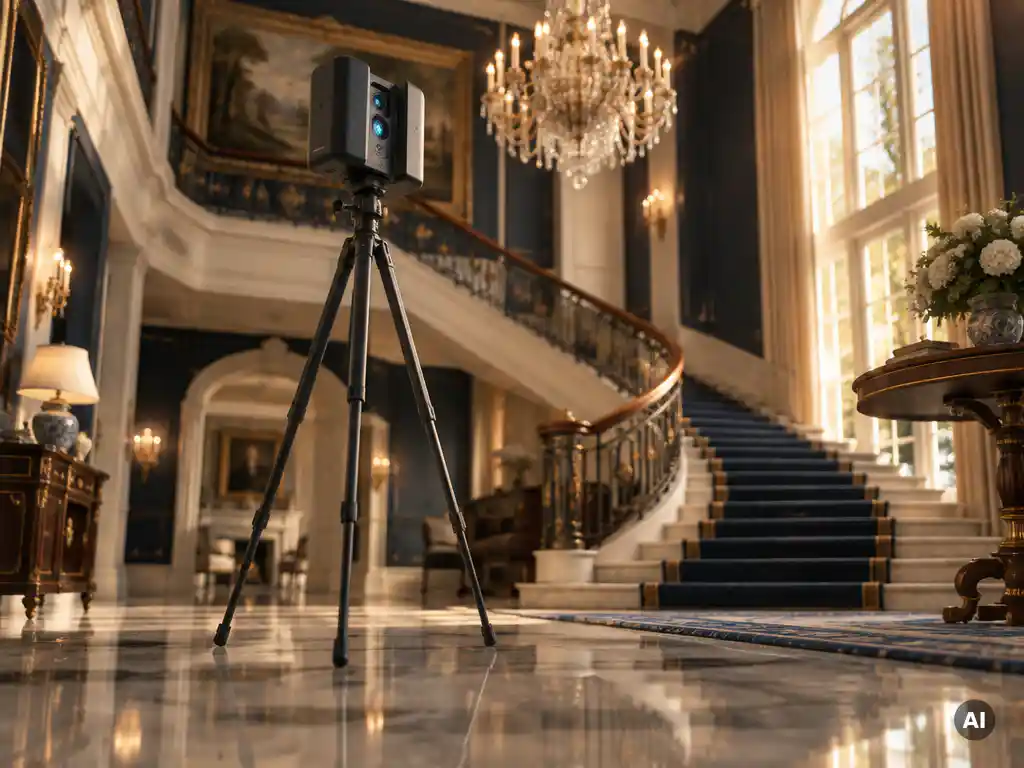
Virtual tours are highly useful for unusual, large and high-value homes because they let remote buyers explore layouts, scale and distinctive features that a handful of photographs cannot convey. They work best when the property is complex, the buyer pool is geographically spread, or privacy limits how many in-person viewings can take place.
For luxury and unconventional properties, the value comes from accuracy and context rather than novelty. Below, we answer the most common questions about how virtual tours perform for these homes, what to watch for on security, and what they cost.
3D virtual tours capture complex layouts by scanning a property from many fixed positions, then stitching the data into a single navigable model. Buyers can walk from room to room in sequence, so split levels, annexes, converted barns and irregular floor plans make sense in a way static images rarely achieve.
Unusual homes are often hard to understand from a photo set. A converted chapel with a mezzanine, a house with several staircases, or a property with a self-contained wing can leave buyers confused about how spaces connect. A walkthrough removes that uncertainty by showing the route between rooms exactly as a visitor would experience it.
Distinctive features benefit too. Double-height ceilings, exposed beams, bespoke joinery and unusual window placements can be viewed from several angles, at the buyer’s own pace.
Yes, virtual tours can cover very large properties and estates, although scale changes the planning. Capture time, file size and navigation design all grow with the number of rooms and outbuildings, so larger homes need a more deliberate approach than a standard three-bedroom house.
For country houses and estates, it helps to think in layers rather than one continuous tour:
Grouping these areas clearly helps buyers orient themselves. A well-structured tour for a large estate lets someone jump straight to the swimming pool or the coach house without clicking through every bedroom first.
Weather and daylight matter more outdoors, so exterior capture is usually best planned for a clear day. Interiors should be styled and lit consistently because inconsistencies become more noticeable across a large number of rooms.
Virtual tours help sell high-value homes to remote buyers by giving them enough spatial understanding to shortlist confidently before travelling. Overseas buyers, relocating executives and busy professionals can rule a property in or out early, which means the viewings that do happen are more serious and better informed.
Luxury buyers rarely decide on a single glance. They want to understand proportions, flow, light and how rooms relate to one another. A virtual tour answers many of those questions upfront, and it can be revisited and shared with partners, advisers or family in different locations.
It does not replace a physical viewing for a purchase of this size. Think of it as a filter and a reference tool. It reduces wasted visits for the owner and agent, and it keeps genuinely interested buyers engaged between viewings.
Virtual tours can be run safely for private homes, provided security is planned before capture rather than afterwards. The main risks are exposing valuables, security systems or the exact location, and each can be managed through preparation and sensible access controls.
Owners of high-value homes should consider these steps before a tour goes live:
Many sellers of prestigious homes choose private-link sharing, so the tour reaches serious enquirers rather than the open internet. Discuss these options with your agent before capture day.
The key difference is that photography shows selected moments chosen by the photographer, while a virtual tour lets the buyer explore the whole property and judge scale and layout for themselves. Photography sells atmosphere, and a virtual tour sells understanding.
Standard photography remains essential for luxury listings. Skilled stills create emotional appeal, highlight craftsmanship and work well in brochures, portals and print. But they are framed, so buyers cannot see what sits just outside the shot.
A 3D virtual tour fills that gap by showing how rooms connect and how big they truly feel. The strongest luxury marketing usually combines both: professional imagery to attract attention, and an immersive tour to build confidence once a buyer is interested. Floor plans derived from the same scan add further clarity for large or irregular homes.
The cost of a virtual tour for a large or high-value home depends mainly on property size, number of rooms, outbuildings and grounds, and any extras such as floor plans or exterior imagery. There is no single UK price, so a bespoke quote based on the actual property is the reliable route.
These factors typically influence the price:
For a home with a high asking price, the cost of a thorough tour is usually small relative to the value of the property and the marketing budget around it. Compare quotes on what is included rather than on headline price alone.
Scene3D is a UK-based 3D scanning company that produces immersive virtual tours for homes of every size and complexity, from city apartments to sprawling estates. As a Matterport alternative in the UK market, it offers a straightforward approach built around clear pricing and fast turnaround.
To see what this looks like in practice, explore Scene3D’s virtual tours of houses, or contact the team for a tailored quote on your property.