
Address
Studio 03
SUM Studios
1 Hartley Street
Sheffield
S2 3AQ
[email protected]
0114 399 1023
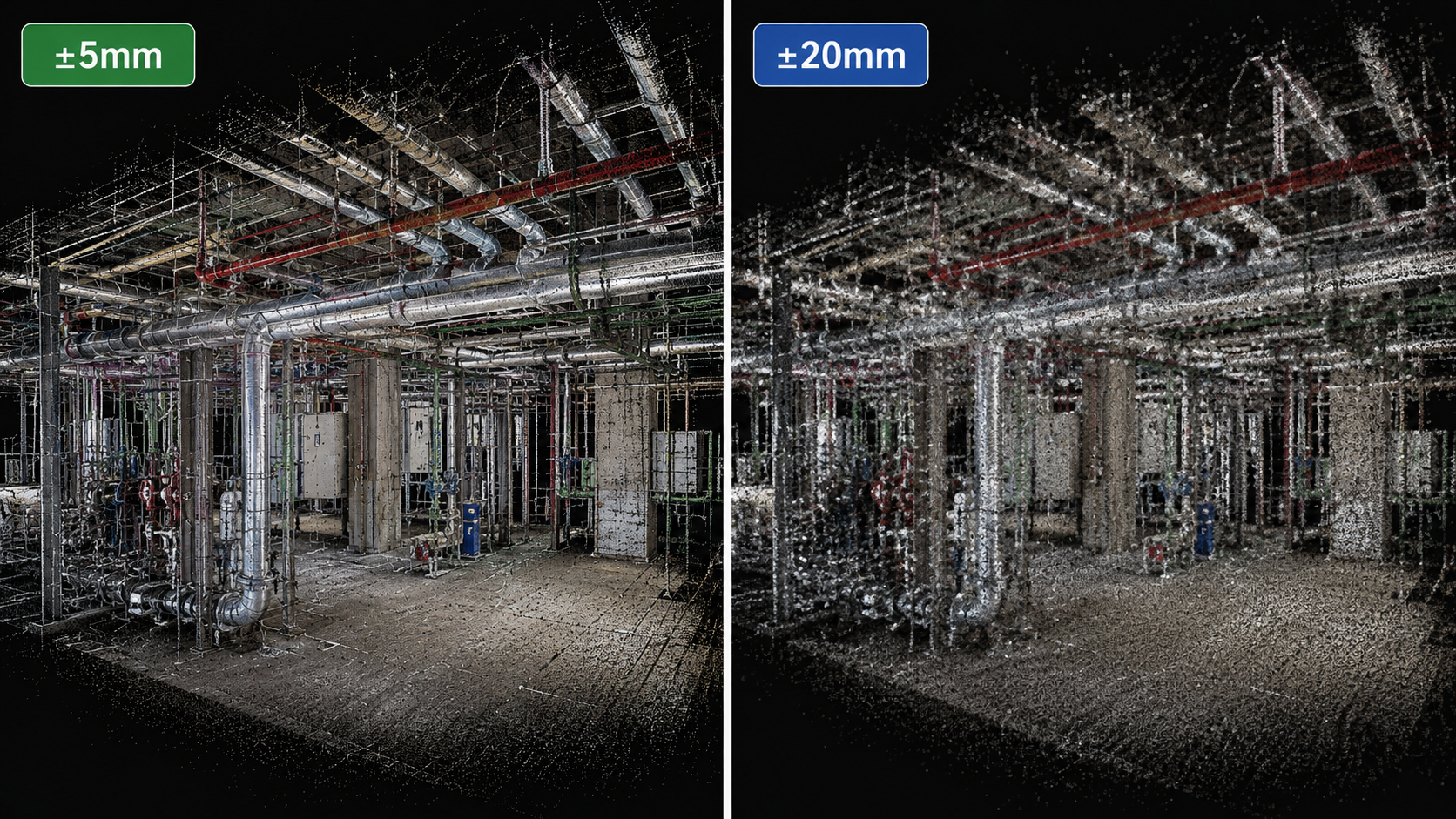
Tolerance, in simple terms, is how much measurement error is acceptable in a project. For example, a tolerance of ±5mm means the measurement can be off by up to 5 millimetres and still be considered correct.
Why does this matter? Because tighter tolerances (like ±5mm instead of ±20mm) require more precision, more time, and more cost, but they also reduce risk during installation.
In this blog, we’ll explain tolerance in a simple, practical way, show why it affects cost, and help you choose the right level for your project.
Tolerance defines how accurate your measurements need to be.
Think of it like this:
The smaller the tolerance, the more exact everything needs to be, from scanning to modelling to execution.
This is especially important in construction and 3D scanning, where small differences can create big problems later.
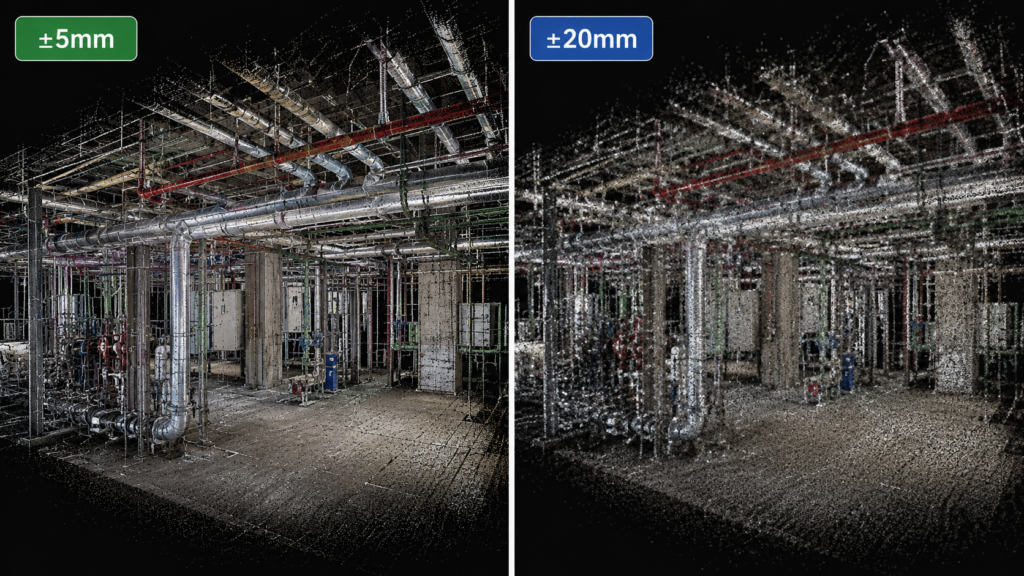
A common question clients ask is: “Why does ±5mm cost more than ±20mm?”
The answer is simple: higher accuracy requires more effort.
To achieve a tighter tolerance:
In short, you’re paying for certainty and reduced risk.
Tolerance isn’t just a technical detail, it directly affects how well things fit together on site.
If tolerance is too loose:
If tolerance is appropriate:
This is why tolerance should always be considered early in the project.
Tolerance becomes critical when dealing with prefabrication and confined areas.
In prefab construction:
If your tolerance is too loose, parts may arrive and simply not fit.
In tight spaces:
Choosing the right tolerance ensures everything works together as planned.
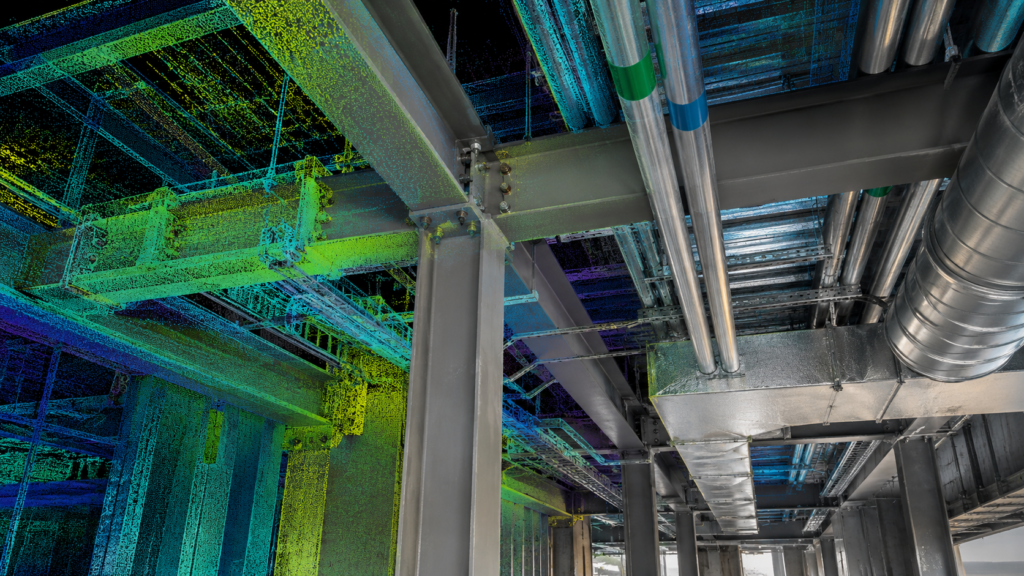
In steel structures, alignment is crucial.
If columns or beams are even slightly off, it can affect the entire structure.
A tighter tolerance ensures:
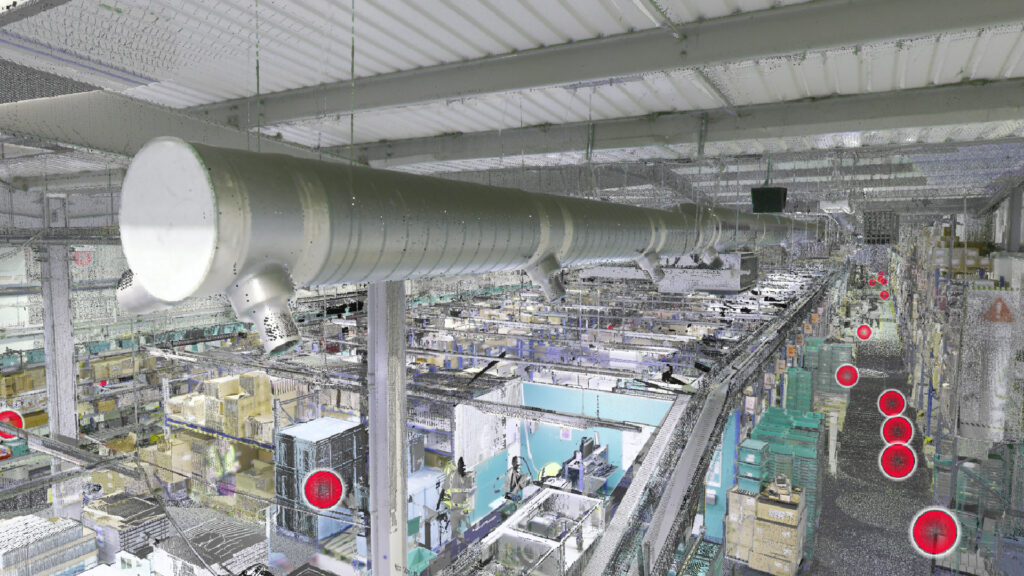
MEP systems often run through very tight spaces.
If tolerance is not accurate enough:
Here, a tighter tolerance reduces coordination issues and costly adjustments.
One of the most important things to understand is this:
Tolerance is not just a number; it’s a risk decision.
The right choice depends on your project type, complexity, and priorities.
There is no one-size-fits-all answer.
You should consider:
The goal is to balance cost with confidence.
Tolerance plays a critical role in how smoothly your project runs.
Understanding it in simple terms helps you make better decisions, not just about cost, but about risk, quality, and long-term success.
At Scene3D, we don’t just provide data and scans, we help you make informed decisions.
We can advise on the right tolerance for your project, ensuring the balance between accuracy, cost, and risk is exactly where it needs to be.
Get in touch with our friendly team today to discuss your project and get any consultations you need.